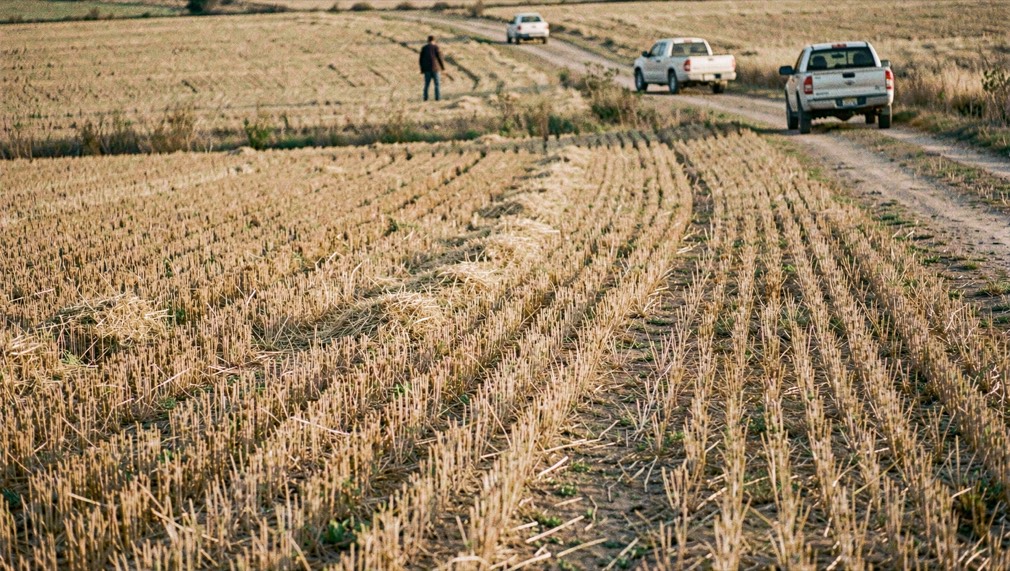
The first days count hunters as much as doves
Opening week of a Texas dove season falls in the first days of September, on ground that still carries summer. The mornings are short, the fields are full, and much of what a hunter reads in them is pressure: where birds and guns happened to meet on one morning.
The state does not count its doves in September. The count happens in spring, by distance sampling, observers recording each dove and its exact distance in a short counted window, and the point counts build the regional estimates behind the annual status report and the hunting forecasts. The opener adds nothing to that arithmetic. It shows where feed, water and shooting coincided, which is field knowledge, not population knowledge.
What does an opener actually prove?
Little, and its honesty lies in knowing that. A slow first morning can mean fewer birds in the region, or a shift to another feed, a wind that bent the flight, water standing somewhere better. The desk reads an opener the way it reads one counting station on a drainage: a single point on a single morning, worth recording and worth nothing alone.
The department keeps its documents separate. Spring surveys produce the estimate, the forecast built on them says what a region likely holds, and the Outdoor Annual turns the framework into dates, zones and daily numbers. How a season gets its dates is decided above the state, in the federal and flyway machinery, and the state booklet prints the result.
Heat writes the early part of the season
The department’s news release for an opener is blunt about weather. Elevated temperatures are likely through the first part of the season, a hunter who feels dizzy should tell someone and get to shade, and someone away from the field should know where the hunt sits and when it ends. Water is equipment, not comfort. Dogs work the same mornings, and the document asks for plenty of water for them and a close watch for heat stress. None of this is regulation. It is the part of an opener that decides how the day is remembered, and the wardens’ opening-week advice states it in plain terms.
Why does the second week read differently?
Because the crowd leaves before the birds do. Texas accounts for about 30 percent of the national mourning dove harvest in an average year and about 85 percent of the white-wing harvest, the game management pages record, and most of it falls in September, a heavy share in the first days.
The wave passes and the doves stay. Opportunity runs straight through fall and winter, ground that felt small on opening weekend has room by the second Saturday, and the evening flight at water holes still runs under fewer guns. In the South Zone, the special white-wing dove days split the calendar again. Those dates are printed in the Outdoor Annual, and the second week is when a hunter starts needing them.
The paperwork that makes a morning legal
Opening week produces violations mostly of paper, and the wardens’ own ranking agrees: hunter education is the problem they meet most. It is required of anyone born after September 1, 1971, it is valid for life, and other states and provinces honor it as Texas honors theirs.
Beside it stand the hunting license, the migratory game bird endorsement and the HIP certification. The public-land hunter adds the Annual Public Hunting Permit, bought on top of the license. It opens more than a million acres: over 180 hunt areas, and roughly 120 dove and small game leases from private landowners. The department’s public hunting pages carry the map, the regions and the dove zones.
First come, on public ground
Some small-game hunts run on regular daily permits issued at the hunt area, first come, first served, which in opening week is not a detail but the whole plan. The walk-in permit spreads hunters across the system, but the dove leases concentrate them: small pieces of leased ground, one weekend, everyone at once. The interactive map lays hunting regions, dove zones and wildlife districts over satellite, terrain or topo bases, and it shows where the crowd will stand on the first Saturday, and where it will not.
The lines a warden will walk
Migratory bird rules are federal at the root, under a treaty act from 1918, and they reach down to the gun and the ground. A shotgun is the only legal firearm for doves, nothing larger than 10-gauge, plugged to hold three shells counting the chamber, and new guns do not always ship with the plug installed, so the check belongs to the hunter.
Bait is the quiet violation. Hunting over a baited field breaks federal and state law, the duty to know sits with the hunter, and the department publishes a plain guide to what counts as normal agricultural operations. Shot angle makes law as well, because pellets that cross a property line are trespass by projectile. A daily bag is a daily number, not a number per outing, and the wardens’ name for the error is double dipping. The real numbers sit in the Outdoor Annual, by county and species.
The contact, and what to have ready
When a warden stops, the small courtesies are also the regulation. Birds stay separate and identifiable, each hunter’s own, with a head or a fully feathered wing left on for identification. The shotgun is unloaded before it changes hands, and the group stops hunting while the check runs. The contact ends sooner for it.
Before opening morning, open the Outdoor Annual, in the app or on its site, and read the county page for the ground to be hunted: the zone line, the special white-wing days, the daily numbers. Keep the public hunting map open beside it and mark one permit area never walked before. The second week belongs to the hunter who did that work in the quiet weeks before the season.
The TPWD opening-week news release
The linked page is a news release from the Texas Parks and Wildlife Department, issued ahead of a dove season opener, in which game wardens give their field advice in quoted words: licenses and endorsements, hunter education, the plug rule, zones, baiting, heat, dogs, young hunters and the conduct of a compliance check. It prints no season dates and no bag numbers. It sends the reader to the Outdoor Annual for those, and it is the document this page reads for the field side of an opener.